Dry Gardens · Notebook II
Planting a dry garden that survives year one
Most dry garden plants die in the first summer, not the first winter: plant cool, mound for drainage, mulch with gravel and water deeply but rarely.
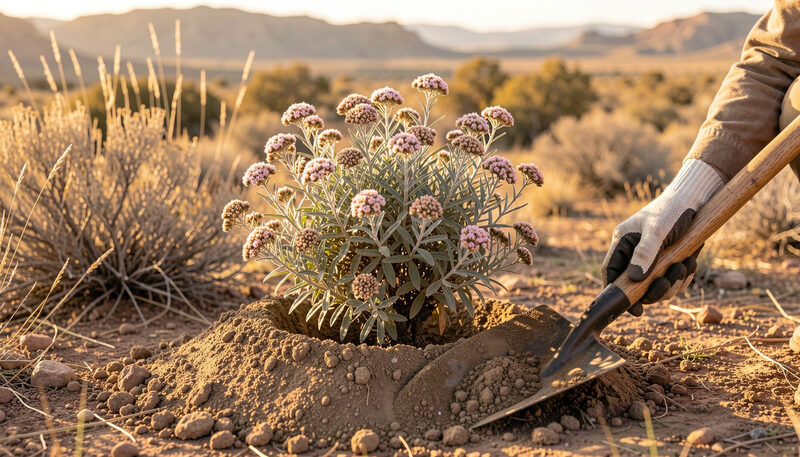
Most dry garden plants die in their first summer, not their first winter. That single sentence organizes everything below. A buckwheat raised on rainfall in the wild meets the garden as a container plant with a crowded root ball, summer heat, and an owner trained by perennials to water generously. The planting method that survives is the one that breaks those habits deliberately: plant in the cool months, mound for drainage, mulch with gravel, water deeply but rarely, and let the crown stay dry. Followed honestly, it turns a risky novelty into a shrub that outlives the hose.
The method suits the whole genus, from the low domes of sulfur buckwheat to the chaparral rounds of California buckwheat and even the island giant Saint Catherine's lace, because all of them share the same upbringing: western sun, gritty ground, and a dry summer they endure rather than drink through.
Plant in the cool months
In the mediterranean and desert west, autumn through late winter is the planting season, and spring plantings fight the calendar. A plant set out in November or December grows roots through the cool, moist months and meets summer with a root system already probing the subsoil. The same plant set out in May meets summer immediately, with a root ball still confined to its pot shape. Nurseries sell all year and the temptation of a warm weekend is real, but the arithmetic is unforgiving: cool season planting buys six months of root growth that summer planting must replace with irrigation, and irrigation is the thing the garden is trying to escape. If a purchase must be made in spring, hold the plant in light shade, water it in its pot, and plant in fall.
Soil preparation the buckwheat way
The genus reads rich soil as an insult, so preparation means drainage, not dinner. Dig a hole as deep as the root ball and two or three times its width, and in heavy soil, work in plenty of gravel or coarse sand so water moves through rather than pooling. No compost, no fertilizer: nitrogen pushes soft growth that wilts in the first heat and invites disease. If the site drains truly badly, plant on a low mound ten to fifteen centimetres high of native soil loosened with grit, rather than in a basin; the garden wisdom that makes a watering basin for vegetables makes a bathtub for a buckwheat. Slopes and raised beds are the genus's native grammar, and the mound imitates them on flat ground.
Mulch with gravel, keep the crown dry
Gravel mulch is the dry garden's signature for good reasons. A five to eight centimres layer of crushed rock or decomposed granite keeps roots cool, suppresses weeds, and lets water in while blocking evaporation, where organic mulches hold moisture against the stems and rot them. The one rule that outranks the rest: keep the gravel, and everything else, back from the crown, the point where stems meet roots. Buckwheats and their chaparral neighbours are killed by the water moulds that thrive on a wet crown in warm soil, the same organisms behind sudden oak death in California's forests, so the base of the plant stays high, dry and airy. A drip emitter placed at the crown repeats the error in miniature; set it a hand's width or more out, where water reaches the young roots and the crown stays dry.
How much water in the first summer?
The first summer is supervised drought, not abundance. Water deeply and rarely: a thorough soak that wets the soil well below the root ball, then nothing until the top several centimetres dry, which in a normal western summer means roughly weekly for the first summer, stretching to every two weeks on loamy ground. Deep and rare teaches roots downward; little and often teaches them upward, into exactly the soil layer that bakes. Watch the plant rather than the calendar: slight afternoon wilt in extreme heat is normal and self resolving by morning, while persistent wilt, yellowing or a soft base means too much water, not too little. By the second summer the interval doubles, and by the third most established buckwheats need nothing but rainfall, with a single deep soak in the worst heat as a kindness rather than a necessity.
Second year and after
The garden's second year is when the method pays. Roots now exploit the mound, the gravel has settled into a skin, and the shrubs begin the shapes that made them wanted: the flat dome, the grey fountain, the chaparral round. Maintenance shifts from watering to grooming, the light annual shearing after bloom described in the pruning guide, and to filling gaps, for which raising replacements by the methods of growing buckwheats from seed costs almost nothing. The garden that began as an exercise in restraint ends as the most alive corner of the property, humming through August, because the pollinators the buckwheats feed found it in the first season and never left.
Pick the driest sunny slope, order small plants in early autumn, and mark a November weekend. The spade work is an afternoon; the drought tolerance is permanent.