People and Pollinators · Notebook III
People and pollinators of buckwheat country
The living side of the genus: the bees, butterflies and hummingbirds that work the dry season heads, and the society and the botanists who mapped every species.
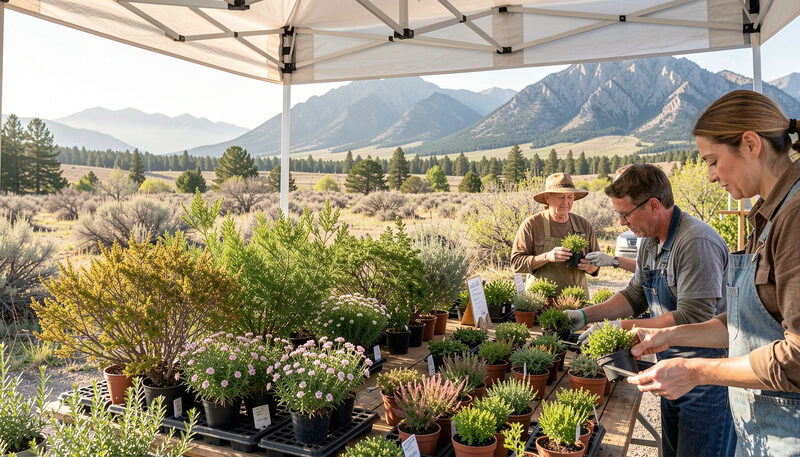
The buckwheats do not grow alone. Around the genus lives a web of dependence and attention: native bees and honeybees working the heads through the driest weeks, butterflies whose caterpillars eat nothing else, botanists who spent careers mapping the species, and a society of gardeners and travellers who pass the rarest seeds hand to hand. This section reads the genus through that web. Its pages are for gardeners who planted a buckwheat and now want to know what arrives on it, and for walkers who want the human story behind the names in the flora.
The journal writes about every organization and person in the third person, including the society that once published on this very domain, which is the right distance for a reader deciding what to visit, join or plant.
The wildlife the genus feeds
The first page makes the ecological case: buckwheats for bees, butterflies and late nectar. In the western dry season the genus is a nectar line when little else flowers, which is why beekeepers in southern California harvest a dark monofloral honey from it and why native plant advocates call the shrubs keystone species. The tighter bonds are the specialists, blue butterflies of the Euphilotes group and the blue copper, whose caterpillars live on buckwheat flowers and leaves, some of them on a single species across their whole range. For a gardener, planting the local buckwheat is restoring an address, and the page sets out the short planting plan, early species, late species, bare ground, no sprays, that turns a dry garden corner into that address.
The society that circles the genus
The second page tells an institutional story: the Eriogonum Society and its seed exchange. Born in the late 2000s, with its first newsletters carrying 2009 dates on this domain when it published here, the society now maintains its website and activities at eriogonum.community, where its trips, members' news and seed exchange are presented. The exchange is the heart for gardeners: members contribute seed, the chairperson assembles the list, and species that commerce never touches circulate among growers, which keeps rare plants in cultivation and provenance information attached. Any reader who finishes the seed growing guide wanting rarer material than the shops sell will meet the society at exactly that point.
The botanist who mapped it
The third page is a portrait of one working life: James Reveal, the mapmaker of Eriogonum. A professor at the University of Maryland and an authority on botanical nomenclature, Reveal revised the genus across a career, describing species and arranging the two hundred and fifty into subgenera and sections, the structure every modern flora and seed label assumes. The old society website on this domain once carried his booklets and revisionary papers for members to download. His is the name behind a remarkable share of the labels a gardener reads, and the page explains why a variable genus needed exactly his combination of desert fieldwork and command of the naming rules.
How the section reads as a whole
Together the three pages frame the genus the way the journal sees it: a group of plants whose value is ecological, communal and scientific at once. The wildlife page explains what a buckwheat planting gives back; the society page shows the human network that keeps the rare species moving; the Reveal page traces the names to the man who settled them. Readers coming from the field guide or the dry gardens section will find this is where their plants, their seed lists and their floras come from.
Read the pollinator page before choosing the next shrub, note the society's address for the seed list, and give the botanist's page ten quiet minutes. The genus is better company with all three in view.
People and Pollinators · entry
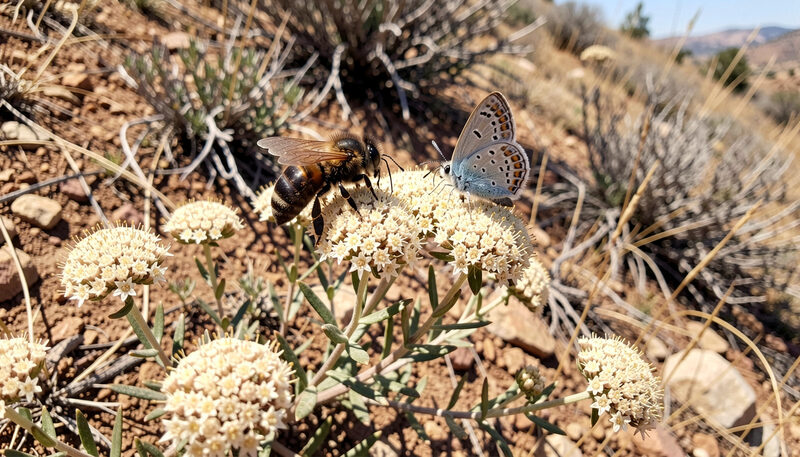
Buckwheats for bees, butterflies and late nectar
When little else flowers in the dry months, buckwheats hold the nectar line: bees, blue butterflies that live on one species, and hummingbirds on the hills.
Native bees, blue butterflies on one species, hummingbirds on the hills.
People and Pollinators · entry
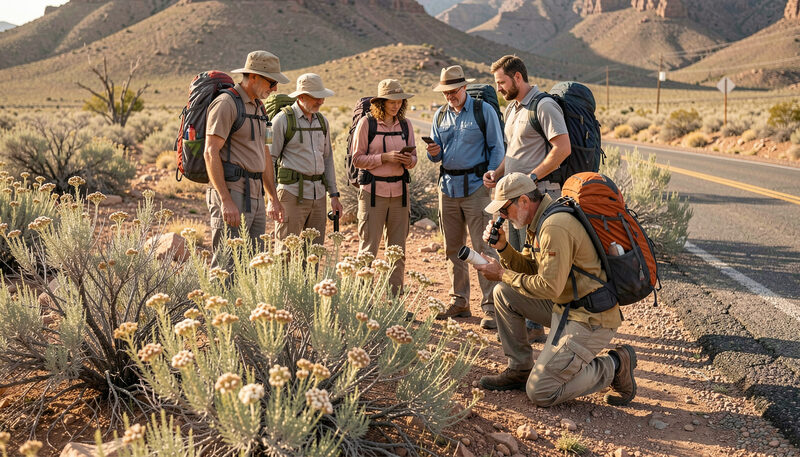
The Eriogonum Society and its seed exchange
Founded around 2009 and publishing today at eriogonum.community, the society runs the seed exchange where rare western buckwheats pass from hand to hand.
The society, its meetings, and the seed exchange where rare species pass hand to hand.
People and Pollinators · entry
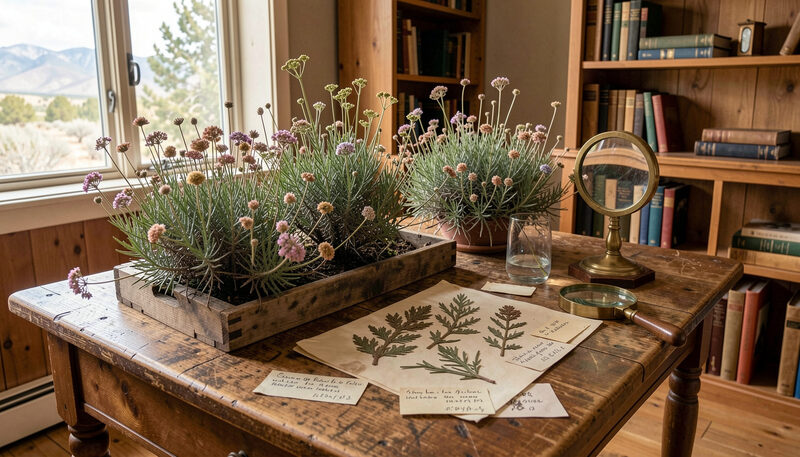
James Reveal, the mapmaker of Eriogonum
James L. Reveal spent a lifetime revising the genus Eriogonum into subgenera and varieties, the reference behind every wild buckwheat name a gardener meets.
A lifetime spent giving the genus the structure behind every garden name.