People and Pollinators · Notebook III
The Eriogonum Society and its seed exchange
Founded around 2009 and publishing today at eriogonum.community, the society runs the seed exchange where rare western buckwheats pass from hand to hand.
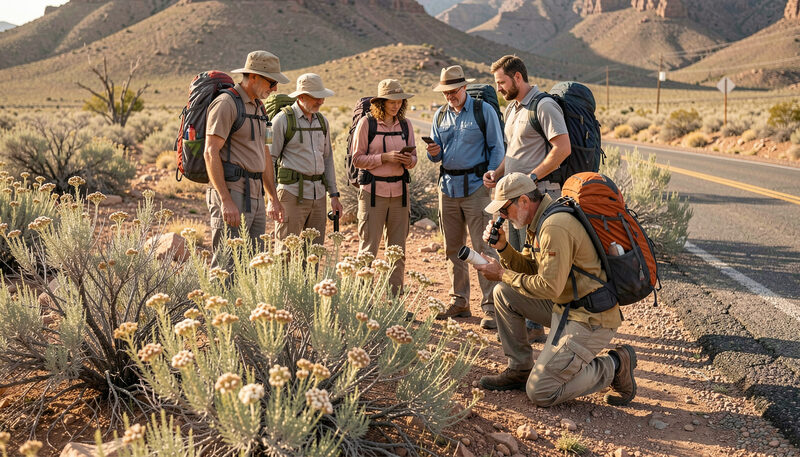
Of all the institutions wrapped around a single plant genus, few are as focused as the Eriogonum Society: an international group of gardeners, botanists and travellers organized around the wild buckwheats and their relatives. The society publishes a website and newsletters, holds meetings and field trips in buckwheat country, and runs a seed exchange through which species no nursery stocks pass from grower to grower. This journal is independent and writes about the society as about any other organization, in the third person, but any reader bitten by the genus will want to know how the society works and what it offers.
There is also a local reason to tell the story carefully. This domain, eriogonum.org, carried the society's website for over a decade, from its Joomla years in 2009 until the site moved on, and the addresses of that old site, newsletters, seed lists and meeting pages, still find their way here through old links. The society today publishes at eriogonum.community, and pointing the curious toward the living organization is simple good manners.
A society born with the 2009 newsletters
The society took organized shape in the late 2000s, and its earliest documents on this domain carry 2009 dates: a run of member newsletters from that first year, notes by the botanist James Reveal on the new society and its aims, and the by-laws and grant pages of a young organization. From the start the group's center of gravity was the genus itself: identification, cultivation, photography and field study, with members ranging from professional taxonomists to rock gardeners. The society's meetings, advertised through those years on this domain, ranged across the West's buckwheat country, and its newsletters carried trip reports and cultivation notes in equal measure.
What the society does today
The society now publishes at eriogonum.community, where it presents itself as an international community for the study and cultivation of Eriogonum and related genera. Its site offers information on society trips and members' news alongside its study resources, and access to further material comes with membership. The pattern is the classic one of specialist plant societies worldwide: a public face that shares knowledge freely, and a member layer that carries the deeper archive and the seed list. Readers of this journal will find the society's own pages the authoritative source for meeting dates, membership terms and current projects.
How the seed exchange works
The seed exchange is the society's engine room. As the society presents it, the seed list is built from contributions by members, with the seed exchange chairperson assembling the list and posting it, so the offering in any year reflects what members collected and donated the season before. For a genus like Eriogonum this matters enormously. Commercial seed houses offer a handful of common species, while the genus counts some two hundred and fifty, most of them never commercial; the exchange is where the rare mountain forms and island species circulate at all. Gardeners who raise plants from that seed follow the same craft described in this journal's guide to growing buckwheats from seed: after-ripening, autumn sowing, patience. The circle closes when those gardeners let a few heads ripen, clean and label the seed, and donate it back.
Why seed exchanges matter for rare plants
Specialist exchanges do quiet conservation work. A species too obscure for commerce survives in gardens because a society's members keep passing its seed around, and those garden populations have more than once preserved plants lost in the wild. The exchange also keeps provenance alive: members label origin, and a grower in a cold climate can select the mountain form rather than the coastal one, a distinction this journal's portrait of sulfur buckwheat, one of the most variable species in the flora, treats at length. The same economy runs through the plant societies linked from the old site of this domain, rock garden clubs and native plant societies, several of which publish their own accounts of buckwheats in cultivation, such as the North American Rock Garden Society's guide to the genus.
What the society's meetings look like
The meeting tradition runs through the society's whole history. On the old site of this domain, each year carried its meeting pages: an agenda and lodging notes for the 2017 gathering, updates and registration pages through 2020 and 2021, a full meeting page again in 2022, with agendas, lodging and camping information posted for members planning the trip. The pattern those pages record is the standard one for specialist plant societies: a long weekend in buckwheat country, timed to the local bloom, with organized walks led by members who know the ground, evening talks, and a dinner where seed envelopes change hands ahead of the formal exchange. A gardener who attends one meeting typically leaves with a plant list, a seed list and a set of landmarks for future solo trips, which is why members describe the meetings as the society's real product and the website as its shop window.
Joining and reading further
The practical path is short. Read the society's site at eriogonum.community, including its seed exchange pages, consider membership for the seed list and archive, and if a meeting falls within reach, go: buckwheat people in buckwheat country are good company. Between meetings, this journal carries its own side of the craft, the field guide to recognizing the genus, the dry gardens section for cultivation, and the portraits of the species gardeners ask about first. The genus rewards both kinds of attention, the society's field excursions and the gardener's single watched plant.
Type eriogonum.community into the browser, read the seed exchange page, and note the joining deadline before the next list closes. That is the whole first step.